










Listen to this article
Estimated 4 minutes
The audio version of this article is generated by AI-based technology. Mispronunciations can occur. We are working with our partners to continually review and improve the results.
Federal programs aimed at addressing climate change are facing significant cuts as the government shifts to artificial intelligence (AI) and slashes thousands of jobs, according to recently released departmental plans.
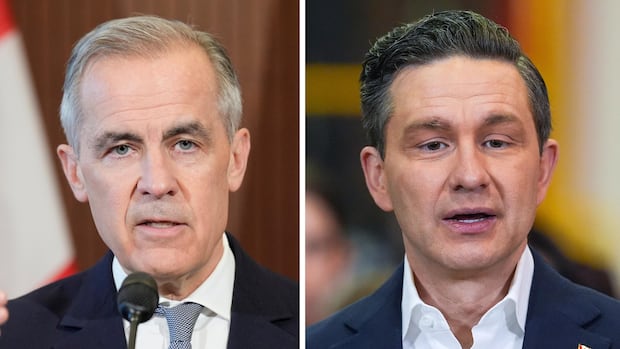
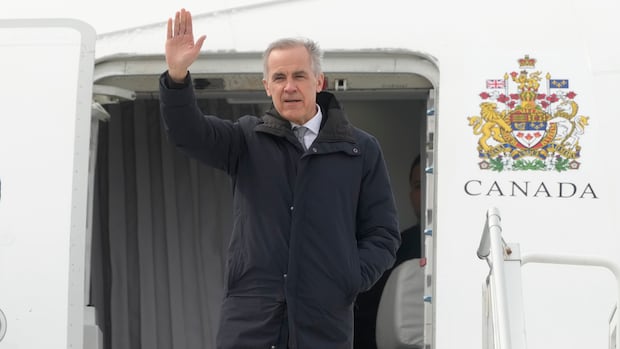
In its latest budget, Prime Minister Mark Carney’s government said it would partly rely on AI to eliminate 40,000 public service jobs, bringing the federal workforce's growth in line with that of the general population.
Canada's two largest public service unions warn Canadians could see a decline in the quality of federal government services as a result.
The Public Service Alliance of Canada (PSAC) and the Professional Institute of the Public Service of Canada (PIPSC) say they're alarmed by the staff reductions set out in departmental plans tabled late Friday.
When you cut jobs, the workload doesn't go down. How are you going to continue maintaining a quality service to Canadians?- Alex Silas, PSAC"When you cut jobs, the workload doesn't go down. How are you going to continue maintaining a quality service to Canadians?" asked Alex Silas, PSAC's national executive vice-president.
"That's the big piece that's missing out of this, and the big piece that the Carney government's not taking into consideration."
Silas also raised concerns about a "lack of transparency" by the government, saying the departmental plans are short on detail about how services will be delivered in the wake of significant job cuts.
For example, Employment and Social Development Canada will have 15,629 fewer public servants in 2029 than it had last year.
The department says it will be "leveraging artificial intelligence to automate internal processes and streamline operations," and plans to merge program delivery "to lower administrative costs."
Environmental programs winding downMeanwhile, advocates warn that a plan to eliminate more than 1,400 public service jobs at Environment and Climate Change Canada (ECCC) by 2029 signals a weakened commitment to reducing emissions.
"What we've seen is a real collapse in the level of ambition," said Keith Stewart, senior energy strategist with Greenpeace Canada.
In the coming years, funding for several environmental initiatives will be reduced, while temporary funding for other programs will not be renewed.
For example, the Low Carbon Economy Fund, first announced in 2016 to fund projects aimed at reducing greenhouse gas emissions and generating clean energy, is winding down.
The program was initially allocated $2 billion over seven years, then another $2.2 billion in 2022. Funding declined amid pandemic pressures, inflation and other challenges, and the program is now expected to be shelved.
"They really have gone from trying to be a leader on climate and environmental protection to doing the minimum," Stewart said of the federal government.
Critical jobs disappearing: unionIn a statement, PIPSC decried the loss of 37,000 federal public service jobs despite an overall increase in government spending.
"Many of the jobs being eliminated are held by scientists, inspectors, engineers, analysts and technical specialists whose quiet but essential work underpins the systems that Canadians rely on every day," the union said in a statement.
Transport Canada’s department plan confirms funding for an incentive tied to a now-scrapped zero-emissions vehicle mandate is being cut. First announced in 2019, the popular rebate program known as Incentives for Zero-Emission Vehicles ended in 2025.
In its place, the government has annouced a new $2.3-billion program to offer consumers and businesses incentives of up to $5,000 to purchase or lease electric vehicles, or up to $2,500 for plug-in hybrids.
Stewart said that's an example of the government's attempt to "influence the market" instead of building "the economy we need" to fight climate change.
Some of the federal programs that are winding down were tied to specific events such as the COVID-19 pandemic, global conflicts and trade deals.